
Services
Water damage
From the first sign of water to the final coat of paint. A clear path back to a dry, comfortable home.
How can we help?
By submitting you agree to our privacy notice and to be contacted by phone, text or email about this request.
Overview
What Water damage work involves.
Water damage restoration is the work of getting a building dry before the damage compounds. It starts with stopping the water and pulling out what is standing, but the part that matters most is what follows: finding where water has traveled inside walls, floors and cavities, and drying the structure back to normal moisture levels.
We handle the whole arc — extraction and drying, removing material that cannot be saved, and the repairs that put the room back together. One company from the first call to the final coat of paint, so nothing falls through the gap between a drying firm and a builder.
Pro tip
Shut the water off at the main before you call us. A surprising amount of what we extract on a second visit is water that kept running while someone went looking for the stop tap.
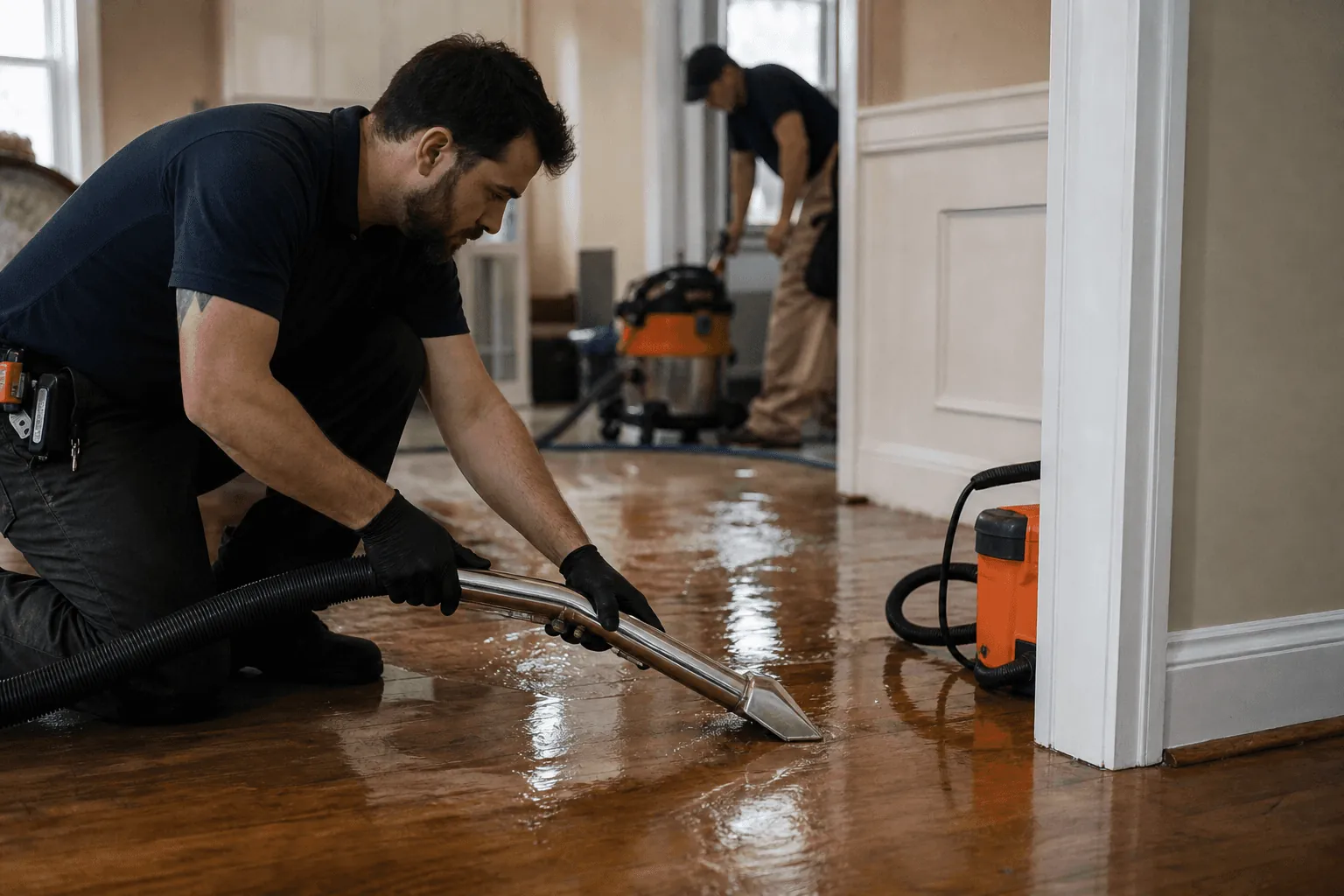
- Emergency water extraction
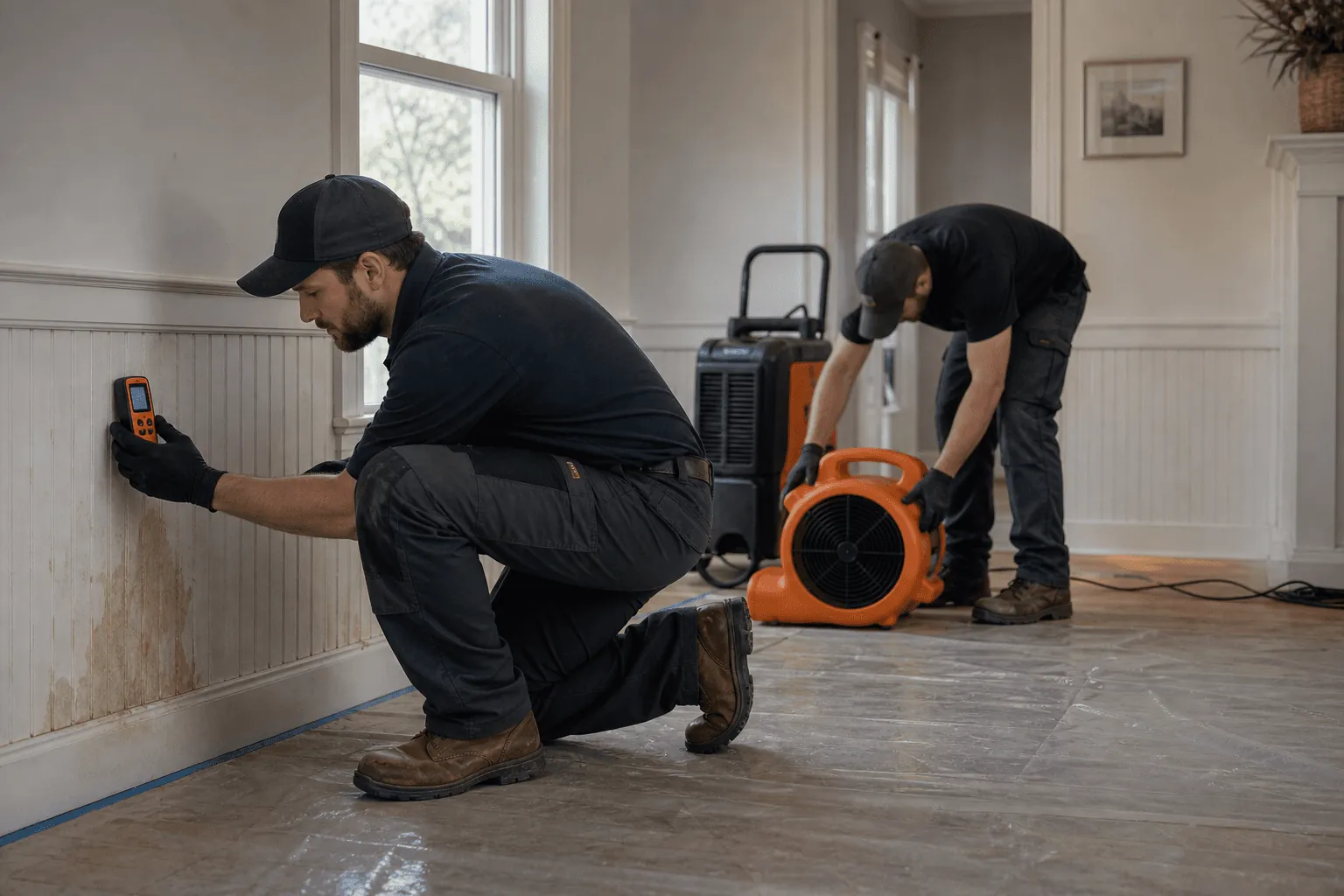
- Moisture mapping and thermal imaging
- Structural drying & dehumidification
- Carpet and pad removal
- Damaged material removal
- Antimicrobial treatment
- Cabinet and subfloor drying
- Daily moisture monitoring and logs
- Interior repairs and refinishing
Our process
How the work runs.
Stop it and extract
We find the source, stop the water where we can, and pull out everything standing before it spreads further.
Map the moisture
Meters and thermal imaging show where water has traveled inside walls and floors — including places that look dry.
Dry the structure
Air movers and dehumidifiers run until readings say the building is dry, not until it feels dry. We log it daily.
Repair and refinish
Replacing what came out, from subfloor and drywall through to paint, so the room ends up as it should be.
Insurance
Working with your insurer.
Sudden and accidental water discharge — a burst pipe, a failed supply line, an overflowing appliance — is commonly covered by homeowner policies. Gradual leaks that have been seeping for months usually are not, and flooding from outside the building normally requires separate flood coverage.
We document moisture readings, photograph conditions and record what was removed and why, then supply it in the format adjusters expect. We will meet your adjuster on site. What we will not do is tell you that you are covered — that decision belongs to your carrier.
Questions, answered
Before you call.
The things people ask us most about this service.

Every hour counts.
Call as soon as you find it. Even if you are not sure how bad it is, we would rather look at a small problem today than a large one next week.
Tell us what happened.
Describe the property and the damage and we will come back to you with the next step. If it is urgent, call (828) 555-0142 — someone answers day or night.